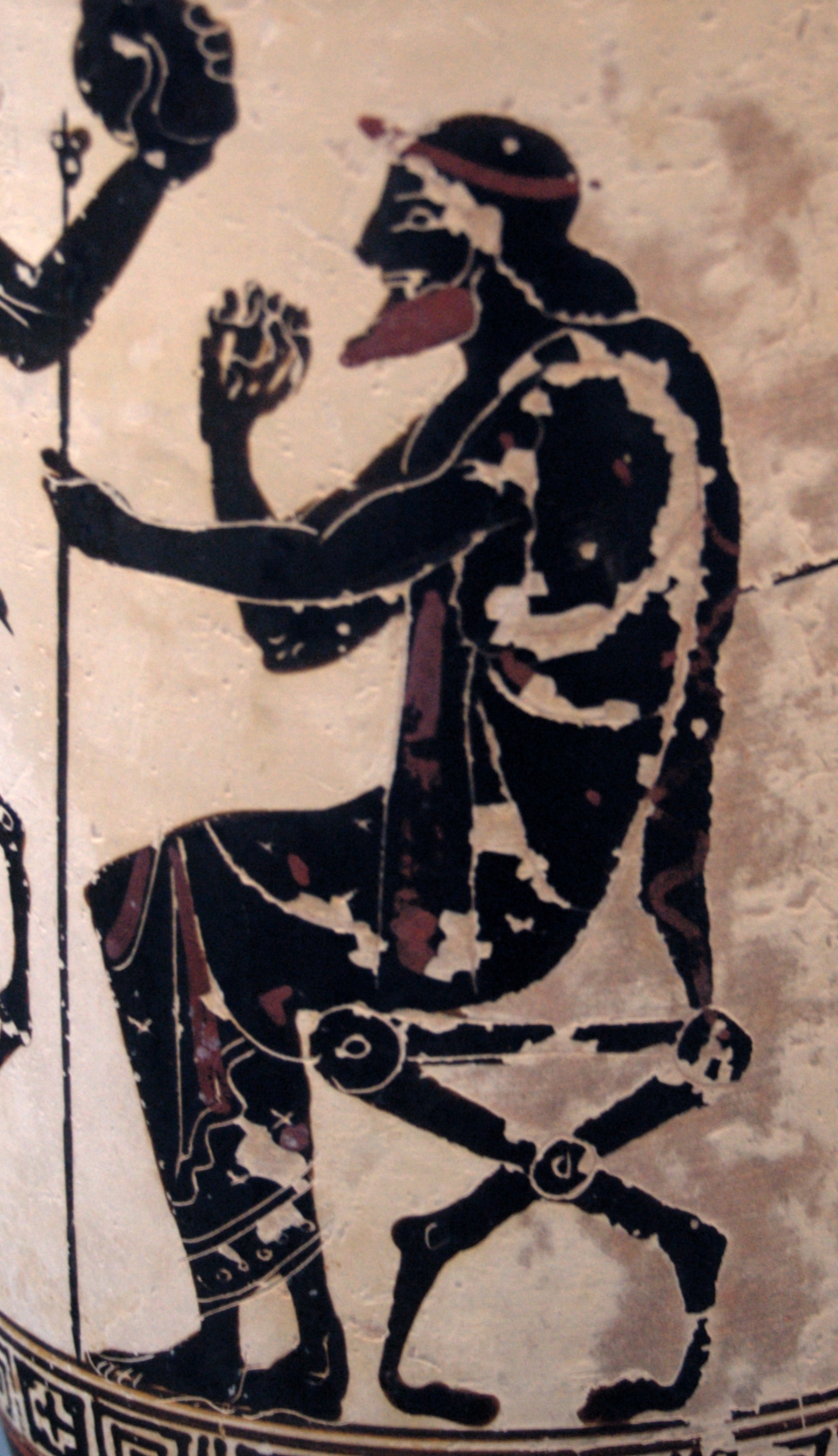
King of Calydon in Aetolia and husband of Althaea, daughter of Thestius. He was the first of men to receive the vine-plant from Dionysus, and fathered Meleager, Deianira, Gorge and Toxeus, whom he slew with his own hand for leaping the ditch.1
Oeneus held Calydon, sprung of the Aetolian line. To Portheus were born three sons who dwelt in Pleuron and steep Calydon — Agrius, Melas, and the horseman Oeneus, who in valour was preeminent among them. His house was famed for its welcome: when Bellerophon came, goodly Oeneus entertained him twenty days in his halls, and the two exchanged fair gifts of friendship — a belt bright with scarlet for a golden cup.2
Apollodorus names his mother Euryte, daughter of Hippodamas. Reigning over Calydon, Oeneus was the first to receive a vine-plant from Dionysus, and he married Althaea, daughter of Thestius — sister to Leda of Sparta. By her he begot Toxeus, whom he slew with his own hand because he leaped over the ditch, and Meleager (though some say Ares begot him), and the daughters Gorge and Deianira, who is said to have been begotten by Dionysus. After Althaea's death he took Periboea to wife, and by her begot Tydeus — though Pisander held the mother to be Oeneus' own daughter Gorge, Zeus driving the king to love his child. Tydeus, exiled for kindred bloodshed, fled to Adrastus at Argos, wed his daughter Deipyle, and fathered Diomedes.3
Hyginus tells how Liber came as a guest to the house of Oeneus and there conceived a love for Althaea; the king, perceiving it, withdrew from the city under pretence of sacred rites and left them. In return for so generous a welcome the god gave him the vine, taught him to plant it, and decreed that its fruit be called oinos after his host — and on Althaea begot the warlike Deianira.4
His chief sorrow grew from a thing forgotten. In the Iliad old Phoenix recalls how Artemis of the golden throne waxed wroth that Oeneus offered her no first-fruits of the harvest from his rich orchard-land, while the other gods feasted on full hecatombs — whether he forgot her or marked it not. In her anger she sent a fierce white-tusked boar that wasted his land, and about its carcass kindled the bitter war of the Curetes and the Aetolians in which his son Meleager came to ruin. Ovid keeps the tale: when the people offered first-fruits to Ceres, to Bacchus and to Minerva, Diana's altars alone stood without incense, and the slighted goddess loosed the beast upon Calydon. Hyginus too makes the boar her vengeance for the yearly sacrifice she alone was denied.5
The end of his house was bitter and its restoration late. The sons of his brother Agrius wrested the kingdom from Oeneus, gave it to their father, and imprisoned and tormented the old man in his own lifetime; Hyginus has Agrius himself drive his brother out. Then Diomedes came secretly from Argos with Alcmaeon, slew the sons of Agrius, and, since Oeneus was old, set Andraemon — husband of his daughter Gorge — upon the throne and bore the king away to the Peloponnese. There the survivors of Agrius waylaid and killed him, and Diomedes carried the corpse to Argos and buried it where a city is now called Oenoe after him. So Pausanias too tells, who saw the place.6
⁂
the spine ignites as you read · hover a bond on the card — every mention of them lights in the story